Seamanship Basics: The Knots, Rules and Habits That Keep Sailors Safe
Seamanship is the oldest safety culture in the world: a body of habits, rules and small skills that turn the sea from a hazard into a workplace. It begins, as it always has, with rope in your hands.
Five knots that do almost everything
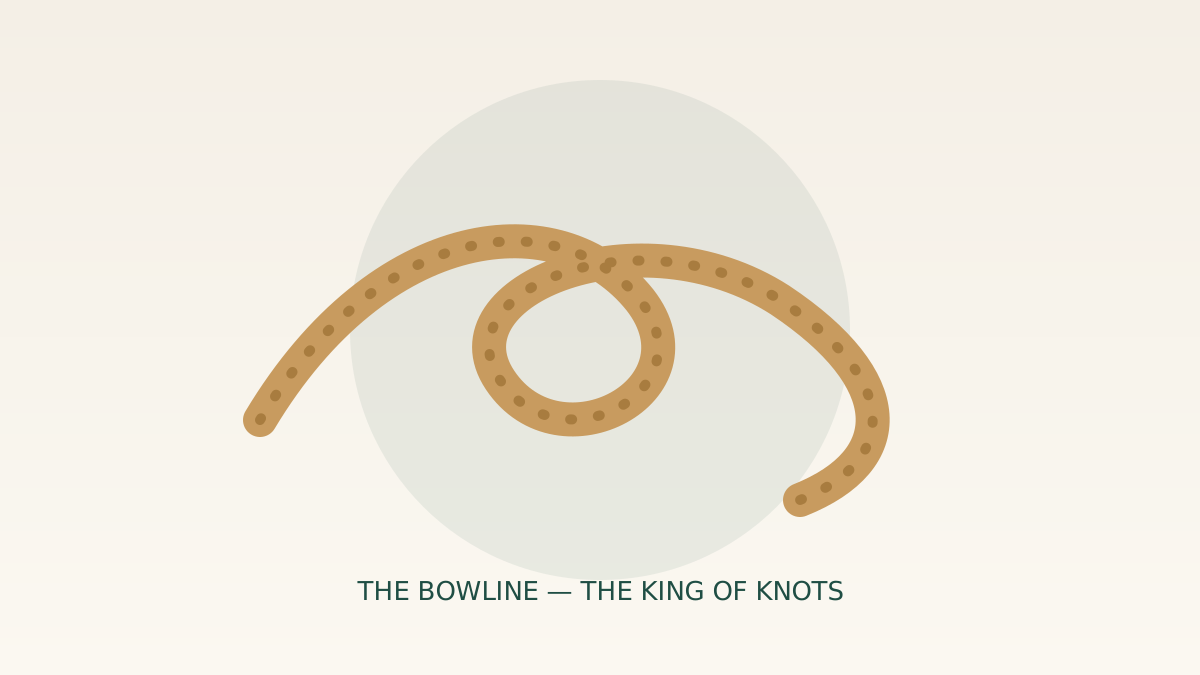
Thousands of knots exist; five earn their keep daily. The bowline makes a loop that never slips yet unties after any strain — the king of knots. The cleat hitch secures a line to a dock cleat in two seconds. The clove hitch hangs fenders and starts lashings. Round turn and two half hitches ties to rings and posts under load. The figure-eight stops a line from escaping its block. Learn these until your hands know them in the dark, because that is when knots are needed.
The rules of the road
Collisions at sea are prevented by an international rulebook — the Colregs — that every skipper inherits. Its skeleton: overtaking vessels keep clear; power gives way to sail (with sensible exceptions for big ships in channels); crossing powerboats give way to the vessel on their starboard side; and everyone, always, must act to avoid collision regardless of rights. Lights and shapes at night extend the same grammar into darkness.
Weather is the real captain
Good seamanship treats the forecast as a gate, not a suggestion. Wind against tide builds short vicious seas; afternoon thermals turn calm bays boisterous; squall lines announce themselves to those who look up. The old discipline still applies: check the forecast, watch the sky, and let the weather make the go/no-go decision while it is still cheap to change plans.
The quiet habits
What separates seamanlike crews is rarely dramatic: lifejackets worn, not stowed; lines coiled so they run free; fuel and engine checked before every start; a float plan left ashore; one hand for the boat when moving on deck; and the skipper's briefing that tells guests where the safety gear lives. Each habit is tiny; together they are why most days on the water end as planned.
Learning it properly
Seamanship rewards structured learning: national sailing schools and boating-safety courses teach the rules, radio procedure and man-overboard drills far faster than trial and error — and error, out there, taxes heavily. The sea has always run the world's fairest school: it examines everyone, tutors no one, and honors exactly what you practiced.
Conclusion
Boats change, engines change, screens multiply at the helm — and seamanship remains what it was for the first sailor: respect, preparation and a few good knots, repeated until they are character.
Frequently Asked Questions
What is the most useful knot on a boat?
The bowline. It makes a fixed loop that holds under load yet unties easily afterward — used for everything from sheets to mooring to rescue lines.
Who has right of way on the water?
The Colregs set the hierarchy: generally power gives way to sail, overtaking vessels keep clear, and vessels restricted in maneuverability have priority. Every skipper is still obliged to avoid collision.
Do I need to wear a lifejacket?
Rules vary by country and vessel, but the seamanship answer is simpler: wear it — most drownings in boating accidents involve people who owned one and were not wearing it.
What should I check before leaving the dock?
Weather and forecast, fuel and engine, safety gear aboard, navigation lights, and telling someone ashore your plan and return time — the five-minute ritual that prevents most bad days.
Sources & Further Reading
- International Maritime Organization (IMO): imo.org
- US Coast Guard Boating Safety: uscgboating.org
- National Maritime Museum collections and references